How we picked
We compared what espresso technicians, machine makers and consistent coffee
reviewers recommend, then checked product specs and long-term owner
feedback. The steps below follow the general process most manufacturers
describe. Your machine’s manual always comes first.
Why scale builds up
Tap water carries dissolved calcium and magnesium. When water is heated,
those minerals come out of solution and stick to boilers, heating elements,
pipes and valves as limescale. Scale slows heating, narrows water paths and
can block solenoid valves and steam wands. Left long enough, it is one of
the most common reasons home espresso machines need repair.
How often to descale
It depends on how hard your water is and how much you use the machine.
Many machines can be set to your water hardness and will remind you.
- Soft water, under about 60 ppm. Every four to six months.
- Medium water, about 60 to 120 ppm. Every two to three months.
- Hard water, over about 120 ppm. Every month or two.
Your local water report or a cheap hardness test strip tells you where you
stand. Some machines include a strip in the box.
Descaler, citric acid or vinegar
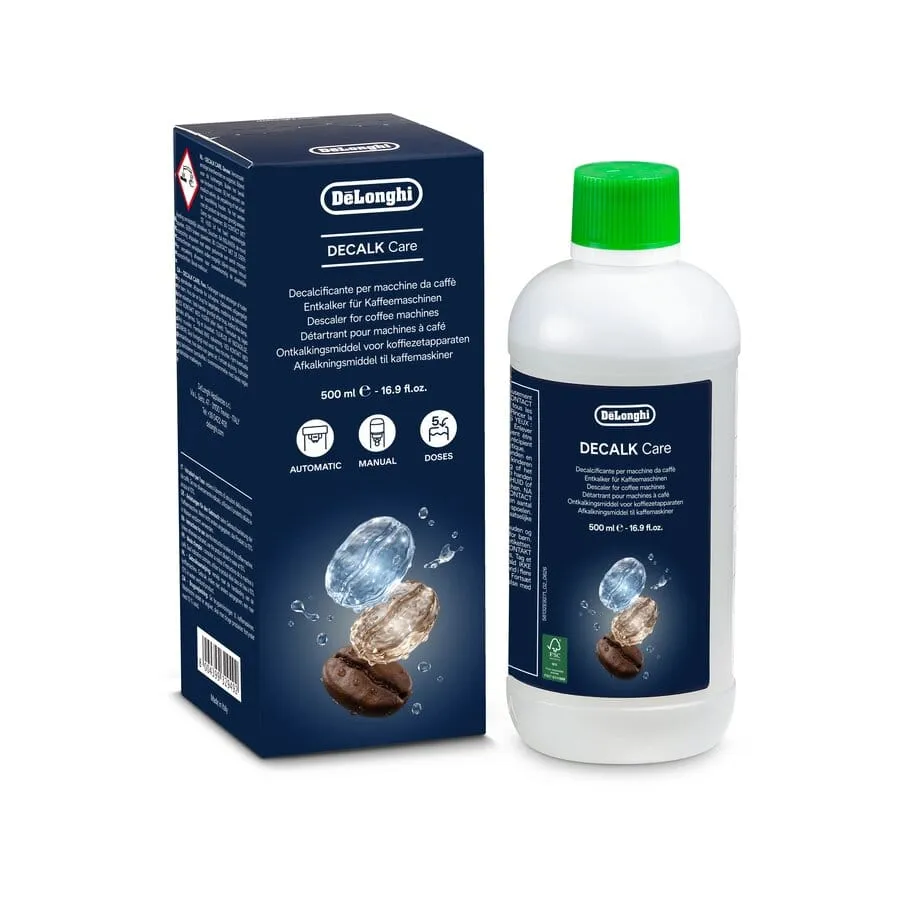
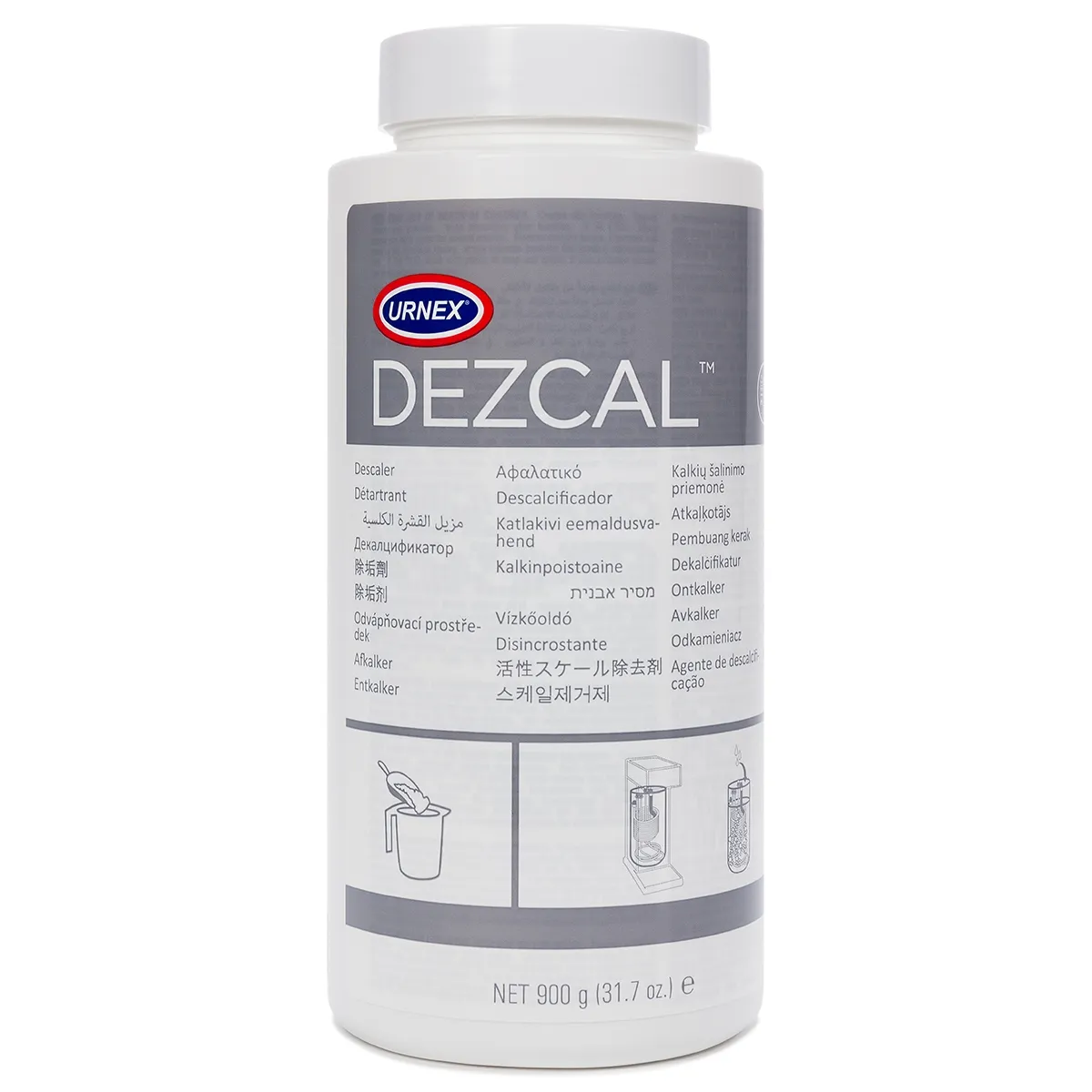
Purpose-made descalers are the safest choice. Most use lactic, citric or
sulfamic acid with additives that protect metal and help rinse. The
De’Longhi EcoDecalk and
Urnex Dezcal work in nearly any
machine.
Plain citric acid works and is cheap. It can leave residue if you do not
rinse well, and the right strength is up to you.
Vinegar is the one to avoid. Most espresso machine makers, including
Breville and De’Longhi, advise against it. It is slow on heavy scale, can
harm rubber seals and some metals, and leaves a smell that takes many
rinses to clear. Using it can also complicate a warranty claim.
Step 1. Prepare the machine
Empty the drip tray and remove any water filter from the tank. Filters
absorb descaler and stop it from reaching the boiler. Take out the
portafilter and empty the bean hopper if your machine has a grinder that
sits in the water path.
Step 2. Mix the descaling solution
Fill the tank with water and descaler at the ratio on the label. Dissolve
powder fully in warm water in a jug before pouring it into the tank.
Undissolved powder can settle in the boiler.
Step 3. Run the descale cycle
If your machine has a descale mode, start it and follow the prompts. If not,
run the solution through the group head and steam wand in short bursts,
pausing for several minutes between bursts so the acid has time to work.
Stop when about half the tank has gone through, wait 15 to 20 minutes, then
run the rest.
Step 4. Rinse thoroughly
Empty, rinse and refill the tank with clean water. Run at least one full
tank through the group head, steam wand and hot water outlet. If you can
still taste or smell descaler, run another tank.
Step 5. Reset and reinstall
Put the water filter back, reset the descale reminder if your machine has
one and pull a test shot. Throw the first shot away.
Brand notes
Breville
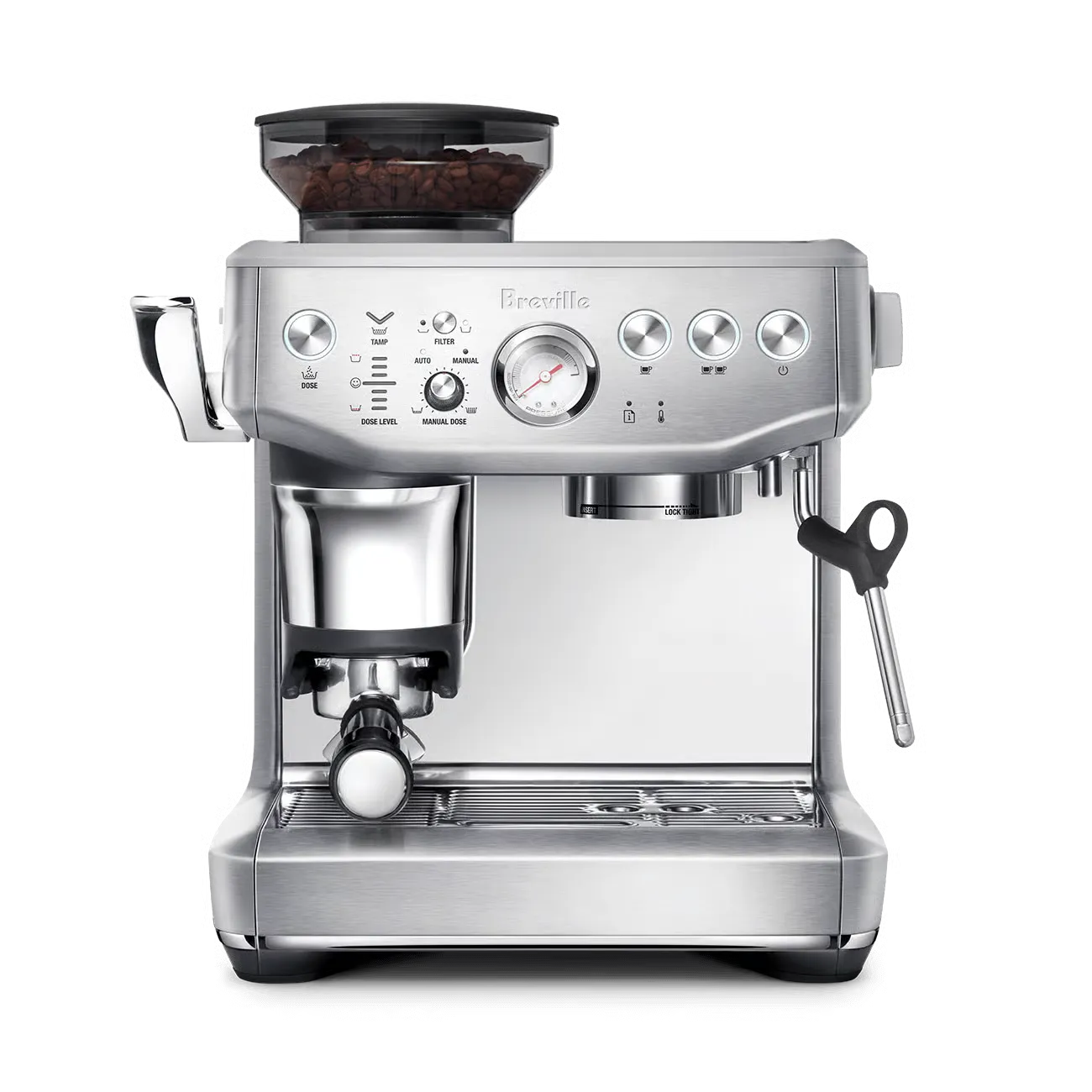
Most Breville espresso machines, from the Bambino to the Barista Express
and Barista Touch, have a dedicated descale program started from the
buttons or menu. The steps differ by model, so follow the manual. Dual
boiler models like the Oracle and Dual Boiler need their boilers drained
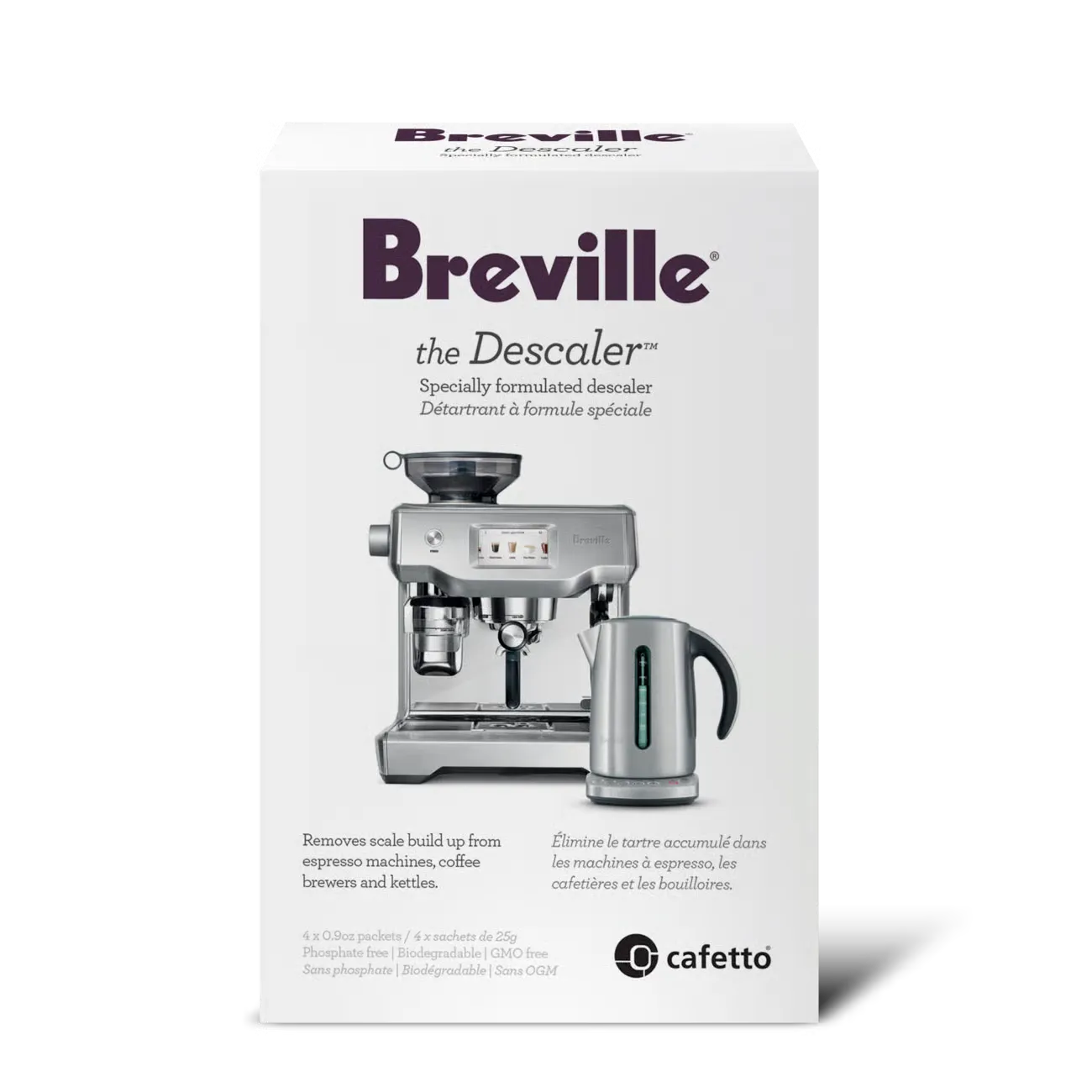
through valves behind a panel. Breville’s own
BES007 descaler is dosed for
these programs.
De’Longhi
De’Longhi manual and bean-to-cup machines show a descale alert and run a
guided cycle. De’Longhi recommends EcoDecalk and warns that other products
can affect the warranty. Bean-to-cup models also need the water hardness
setting matched to your water so the reminder comes at the right time. See
our guide to bean-to-cup coffee machines
for models that handle this well.
Nespresso
Original and Vertuo machines each have a descale mode entered by a button
combination listed in the manual. Nespresso suggests descaling every few
months or after a set number of capsules, more often with hard water. A
liquid like the Impresa descaler
is sized for these small tanks. See our guide to the
best Nespresso machines.
Gaggia
The Gaggia Classic has no descale program. Run the solution through the
group head and steam wand by hand in stages, as in step 3. Gaggia sells its
own descaler, and owners often use a mild lactic or citric acid product on
these machines.
Preventing scale
The best descale is the one you never need. Soft water slows scale a lot.
- A filter pitcher or the filter in your machine’s tank cuts some hardness
and chlorine. It helps but does not fully soften hard water.
- Distilled water on its own is too pure. It can taste flat and some
machines rely on minerals to sense water level.
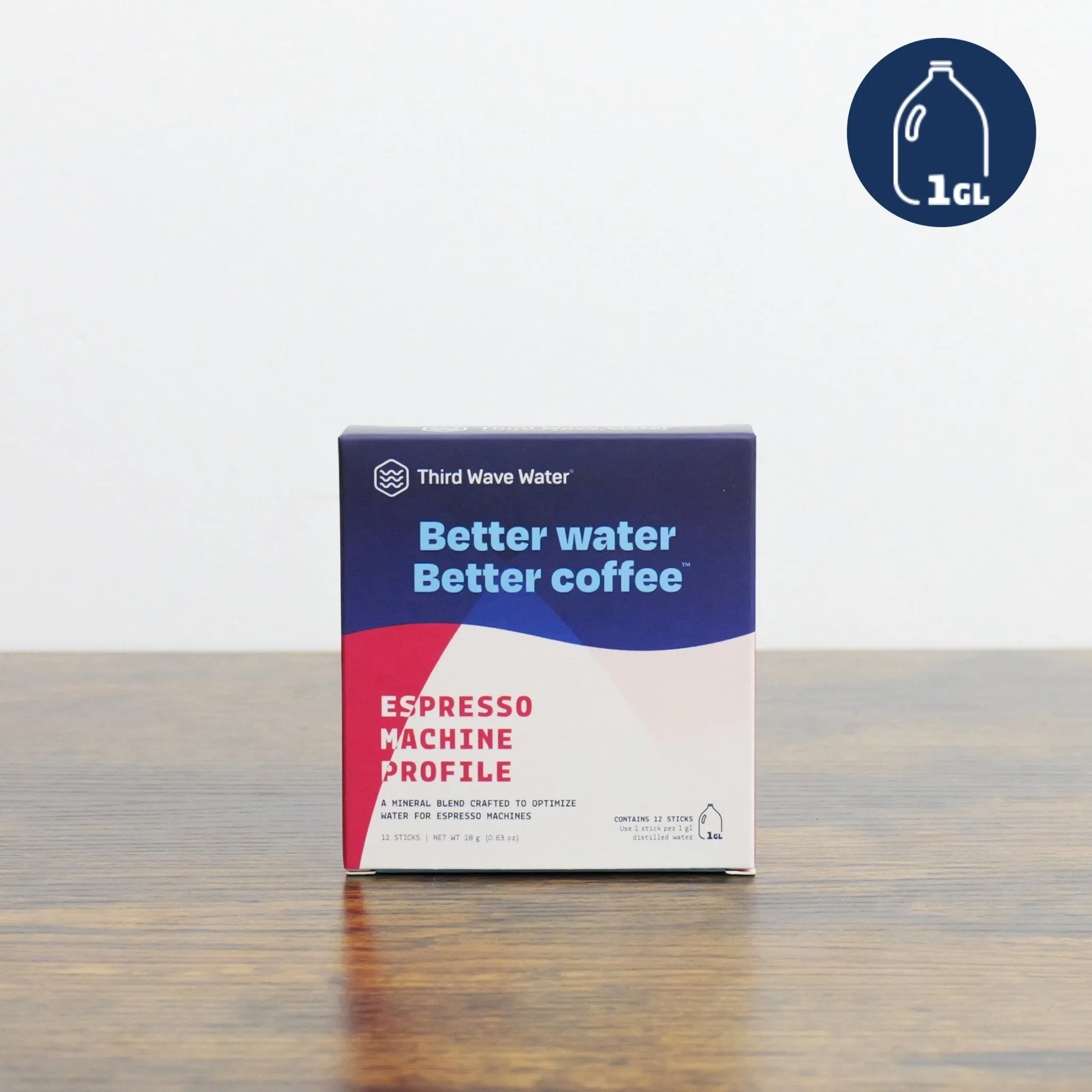
- Distilled or reverse osmosis water remineralized with
Third Wave Water Espresso Profile
gives you consistent, low-scale water that still tastes good.
Pair a descaling routine with regular backflushing and cleaning. Our guide
to espresso accessories covers the
tools that make it easier.
Frequently asked questions
What happens if I never descale?
Scale slowly reduces heat and flow until valves block or the heating
element fails. Shots get cooler and less consistent long before that.
Can I descale with vinegar?
You can, but most manufacturers advise against it. It can damage seals,
leaves a lasting smell and works slower than a proper descaler.
Is descaling the same as cleaning?
No. Descaling removes mineral buildup inside the water path. Cleaning
removes coffee oils from the group head, portafilter and baskets with a
backflush detergent. Your machine needs both.
Do I need to descale if I use filtered water?
Yes, but less often. Most filters only reduce hardness. Check the
descale reminder or watch for slower flow and cooler shots.